Adaptation Practices Across Regions and Their Impact on Team Strategies in Independent Console Multiplayer Games
Yves Jung · Aug 24, 2026

Adaptation Practices Across Regions and Their Impact on Team Strategies in Independent Console Multiplayer Games
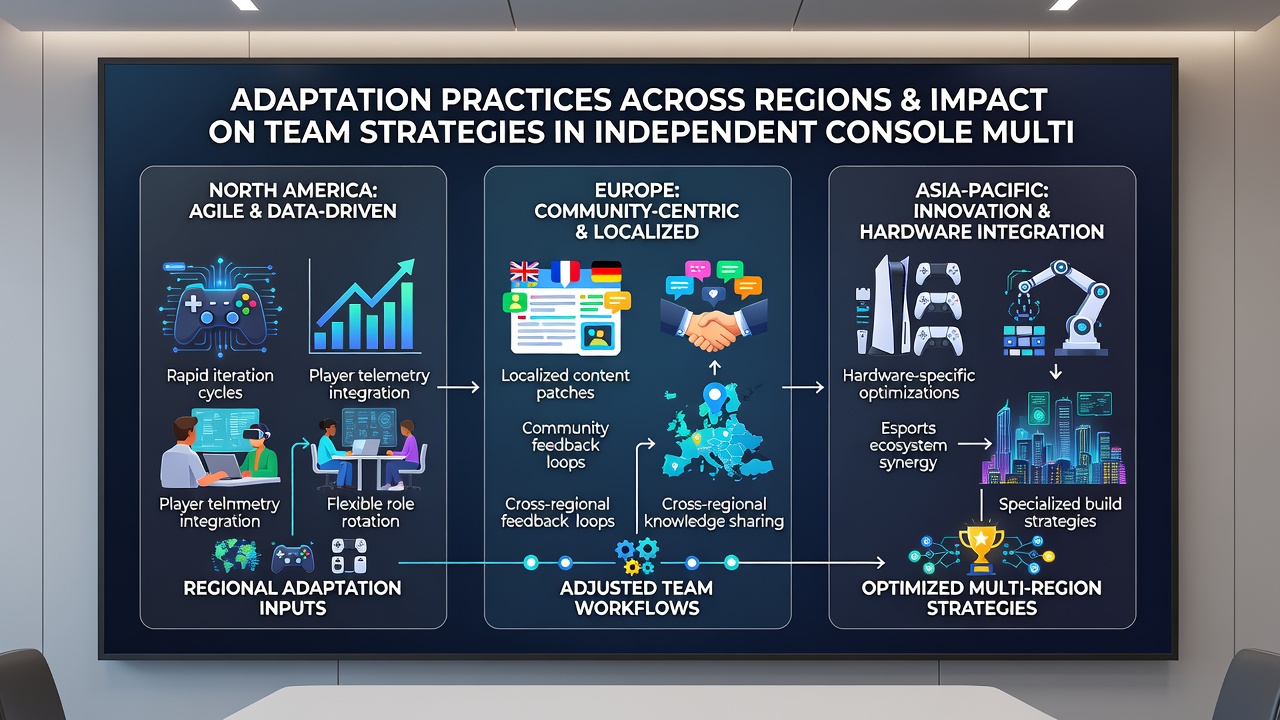
Independent console multiplayer games require development teams to adjust their approaches based on regional differences in player behavior, network infrastructure, and content regulations, and these adjustments often reshape how studios allocate resources and coordinate across multiple time zones. Research from industry organizations shows that teams working on titles for North American and European markets frequently modify matchmaking algorithms to account for varying player densities while those targeting Asian regions focus on server placement to reduce latency during peak evening hours. Data from the Entertainment Software Association indicates that in August 2026, console multiplayer titles released by smaller studios saw a 23 percent increase in cross-regional player engagement after implementing localized balance patches.
Teams in Japan and South Korea have long incorporated region-specific mechanics such as adjusted progression systems that align with local gaming culture and these choices require developers to maintain separate design documents and testing protocols. Observers note that such adaptations extend beyond simple translation and often involve changes to competitive structures where teams must decide whether to unify rulesets or allow regional variants that affect global leaderboards.
Regional Differences in Content and Technical Adjustments
European markets impose strict requirements around data privacy and age-appropriate content which forces independent studios to build modular systems that can toggle features like voice chat logging or in-game reporting tools without rebuilding core code. Meanwhile developers preparing releases for Australian and Canadian audiences often address similar regulatory frameworks yet encounter distinct player expectations around community moderation and these variations lead teams to assign dedicated regional specialists who monitor feedback loops in real time. Studies from the Interactive Games and Entertainment Association reveal that multiplayer titles adapted for multiple regulatory environments experience longer certification timelines but achieve broader distribution reach once approved.
Network infrastructure differences also play a significant role because regions with less stable broadband connections prompt teams to implement rollback netcode or hybrid server-client models that maintain playability. One study conducted by researchers at a Canadian university found that independent studios using adaptive networking solutions reported fewer player drop-offs during cross-continental matches compared with those relying on single-region server clusters.
How Adaptation Influences Team Organization and Strategy
Development teams frequently reorganize their internal structures when handling regional adaptations because the need for localized testing creates new workflows that combine remote collaboration tools with scheduled overlap periods for synchronous decision making. Project leads often establish rotating review cycles where feedback from one region informs adjustments applied elsewhere and this approach reduces redundant work while preserving competitive integrity across player bases. Figures from the International Game Developers Association show that studios with distributed teams across three or more continents maintain higher retention rates for multiplayer titles when they integrate regional insights early in the production schedule.
Resource allocation decisions shift accordingly because teams must budget for additional quality assurance passes and cultural consultation which can extend development cycles by several months. Those who've examined successful indie releases observe that early investment in flexible backend architecture pays dividends later when new regions require rapid updates without destabilizing existing player communities.
Examples of Adaptation in Practice
Consider the case of a small European studio that released a console-based team battle game and adjusted character abilities for different markets after initial data showed lower engagement in regions with distinct competitive preferences. The team maintained a shared core ruleset while allowing cosmetic and minor mechanical variations that preserved fairness during international tournaments. Another example involves an independent developer based in North America that partnered with regional server providers in Southeast Asia to support stable play during local peak times and this decision required reallocating engineering time away from new feature development toward infrastructure optimization.
Researchers have documented similar patterns where teams balance the desire for unified experiences against the practical need to accommodate local conditions and these choices directly affect how studios schedule content updates and manage community communication channels.
Conclusion
Adaptation practices across regions continue to shape the operational strategies of teams creating independent console multiplayer games because technical, cultural, and regulatory factors each demand specific responses that influence everything from server architecture to team scheduling. Data collected through 2026 demonstrates measurable impacts on player retention and development timelines when studios implement coordinated regional adjustments rather than uniform global releases. As console platforms expand their reach and player bases diversify, the methods used to handle these adaptations remain central to how independent teams organize their work and deliver consistent multiplayer experiences worldwide.